
Zero Twist Towels vs Ring Spun: Where Each Yarn Wins
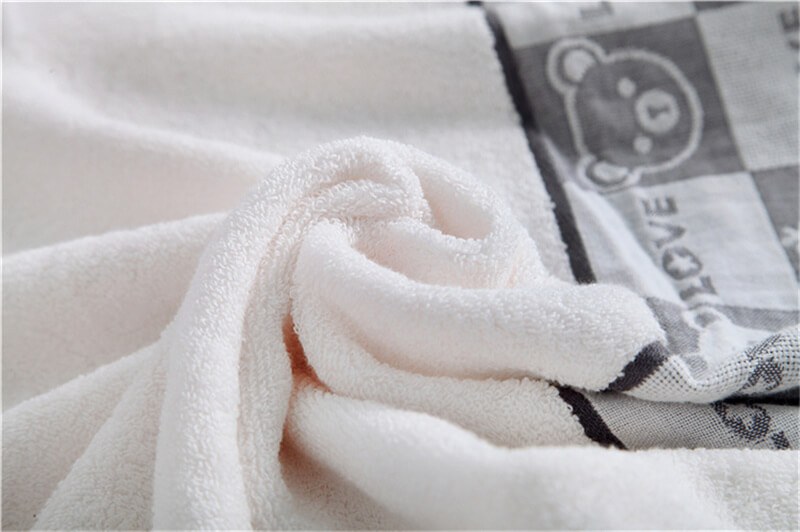
Short answer: Twist is the hidden variable in every terry towel, and it decides how the towel ages. Ring spun yarn — fibres twisted tightly into a compact, strong thread — anchors loops that survive a hundred or more commercial washes, which is why it is the default for hotel bath programmes. Zero twist yarn — staple cotton held together during weaving by a water-soluble binder that is washed out in finishing, leaving the fibres nearly parallel — feels strikingly softer, wicks water faster and carries only a modest premium, but pills, sheds loops and thins far earlier. The honest answer is not a winner but a match: retail, baby and low-cycle spa lines buy zero twist softness; industrial laundries and hotel bath programmes buy ring spun life. The table and the specification section below turn that logic into lines you can put straight into a purchase order.
What twist actually does to a yarn
Cotton does not leave the carding machine as a thread. It leaves as a fuzzy ribbon of short staple fibres, and twist — measured in turns per metre — is what turns that ribbon into a usable yarn: the fibres press against each other, friction locks them, and the thread gains strength. Ring spinning, the benchmark construction for quality terry, produces a compact, smooth, strong yarn with a controlled amount of twist. Turn the twist up and the yarn gets stronger, smoother and harder — and the finished towel feels flatter, harsher and wicks more slowly. Turn it down and the yarn gets loftier, bulkier and softer — and weaker, because there is less friction holding the fibres together.
In a terry towel only the pile yarn stands off the fabric as loops, so pile twist is where the whole hand-feel-versus-durability negotiation happens. Ground yarns stay firmly twisted; the loops are free to be plush. Every towel specification is therefore a point on a twist curve, and the two ends of that curve have been given market names: the durable end is called ring spun, and the soft end is called zero twist.
What “zero twist” really means
A zero twist pile yarn contains almost no twist at all — the staple fibres lie nearly parallel, like a miniature paintbrush. Left alone, such a yarn would fall apart on the loom, so during weaving it is wrapped with a water-soluble binder yarn (almost always polyvinyl alcohol, PVA) that acts as a temporary scaffold. After weaving, a hot finishing wash dissolves the binder away completely, and the loop stands on the towel as pure, un-twisted cotton: maximum loft, maximum surface softness, and open capillary channels between the fibres.
That construction explains both the selling points and the failure modes. With no compressed yarn core, the loop springs open and touches skin with fibre ends rather than with a cord — the “instant softness” that sells in retail. With the capillaries open rather than squeezed, water wicks on contact instead of beading — the fast absorbency. And with no twist to lock the fibres together, there is nothing to stop them from working loose: the same construction pills, fuzzes, snags and sheds loops from the first aggressive wash onward. The binder also introduces a quality gate of its own: if finishing does not remove the PVA completely, the towel arrives stiff and low-absorbent and only recovers after several washes — a defect worth a clause in the contract, not a hope.
The two constructions, compared
Set against each other on the properties that actually decide a programme, the trade-off is unusually clean:
| Property | Zero twist pile | Ring spun (combed) pile |
|---|---|---|
| Hand feel | Very soft and lofty; the “premium retail” first touch | Firm-plush; softens over the first washes and keeps its body |
| Absorbency onset | Fastest — open capillaries wick on contact | Good; a dense pile reaches full pickup after 2–3 washes |
| Pilling and fuzz | Appears early; needs gentle chemistry and low heat | Resists well; combed yarn sheds little lint |
| Loop snag and loss | The main failure mode — loops pull out and shed | Loops stay anchored through the whole life |
| Commercial wash life | Tens of gentle cycles; thins visibly with rotation | A hundred or more industrial cycles |
| Drying speed | Quick — the open structure releases water fast | Slower in dense, high-GSM piles |
| Cost index | ~110–125% of a ring spun equivalent | 100% baseline |
| Best fit | Retail, baby, robes, spa programmes with gentle laundry | Hotel bath programmes, gyms, pools, industrial laundry |
Read the cost row carefully, because it is where buyers talk themselves into trouble. The premium for zero twist is modest at the invoice — but the real price of a towel is cost per use, and cost per use is governed by how many wash cycles the pile survives in your laundry. A yarn that is 115% more expensive but lasts one third as long in an industrial house is not a premium; it is a discount in disguise.
Where zero twist earns its place
Zero twist is not a gimmick — in the right programme it is simply the correct engineering choice:
- Retail and home collections. The first touch decides the sale on a shelf or a product page, and home laundering is gentle by nature; zero twist converts its softness directly into conversion.
- Baby and kids lines. Infant skin rewards the absence of compressed yarn ends, and a family towel sees a few dozen home washes, not a tunnel washer — the same logic the baby bath towel guide applies to muslin.
- Bathrobes and spa wraps. Robes live on drape and softness rather than on wash count, and spa laundering is far gentler than hotel laundry — see the care and replacement logic in the bathrobe care guide.
- Beach and pool retail. Soft hand plus fast drying is exactly what a leisure towel is judged on, and sand-and-sun use rarely involves aggressive wash chemistry.
- Premium suites with in-house gentle laundry. A property that controls its own laundry and runs moderate cycles can offer zero twist bath towels as a deliberate luxury tier — knowingly, and with the reorder maths done in advance.
Where ring spun keeps the contract
Wherever the towel is an operating asset washed by professionals, twisted yarn wins and keeps winning:
- Hotel bath programmes. A house towel is targeted at a hundred or more commercial cycles before replacement; ring spun loops are the only construction that reliably gets there at a sane cost per use.
- Industrial and tunnel laundries. High temperature, strong alkali, bleach where whites are concerned, violent extraction — each of these punishes un-twisted fibre, and a zero twist pile handed to such a wash simply sheds its loft year one.
- High-rotation gyms, pools and spas. Daily wash rotation with hundreds of towels means the pile is always wet or always in a machine; anchored loops are what keep the inventory from thinning into cheesecloth.
- Logo and border programmes. Embroidery and dobby borders sit on a fabric that must stay flat and dimensionally stable; the fuzz of a tired zero twist surface both blurs the branding and telegraphs wear to the guest.
- Any tender scored on total cost. When the buyer scores suppliers on cost per wash cycle rather than on invoice price, ring spun wins the arithmetic in most professional settings — and the specification should be written so that it can.
Specifying the pile yarn
Whichever construction you buy, write the yarn down. A purchase order that says only “100% cotton terry, 500 GSM” invites both constructions, and the fabric you receive is then decided by whoever quoted cheapest that week. Pin these six lines and the sample will survive into bulk:
- Name the construction. “Ring spun combed pile”, “low twist pile” or “zero twist pile, PVA binder, fully removed in finishing” — as written words, not as a feel.
- Pin the weight band together with the yarn. GSM only means something relative to construction; the bands in the bath towel GSM guide assume a conventional twisted pile, and a zero twist towel at the same GSM will feel dramatically thicker.
- Bind the binder. For zero twist, require finishing records or a residual-binder check — leftover PVA means a stiff, slow towel that softens only after several customer washes, and it is the most common zero twist complaint.
- Test absorbency by method, not by hand. Specify sink-time testing to AATCC Test Method 79, the standard absorbency method for textiles, with a single-digit-second target for the finished, washed fabric.
- Reference a performance specification. Anchor shrinkage, breaking strength and construction tolerances to ASTM D5433, the performance standard for woven cotton towels, so acceptance is a table lookup instead of a negotiation.
- Run a wash-lab pilot before bulk. Twenty to thirty accelerated cycles on a few pieces, weighed and inspected for pilling, loop loss and weight loss, cost almost nothing and predict year-two reality far better than any hand test on a fresh sample.
One line ties the whole specification together: state the laundry setting on the purchase order — “hotel bath programme, tunnel washer”, “retail, home laundering”, “spa, gentle in-house laundry”. A mill that knows the wash reality will steer the twist, the pile ratio and the finishing to match it, instead of quoting blind against a photo.
Buy the wash cycle, not the sample
The sample in your hand is wash number zero; the towel you will actually be reordering is wash number one hundred. Zero twist is engineered to win the first touch, ring spun is engineered to win the total cost per use — decide which of those two numbers your programme is scored on, and write it into the specification before the deposit.
The laundering reality: what happens after wash thirty
The two constructions separate fastest in the laundry, and the mechanism is simple: a twisted yarn holds its fibres under permanent compression, so agitation has little to abrade; an un-twisted pile offers its fibre ends to every drum wall, every chemical bath and every other towel in the load. After a few dozen commercial cycles a zero twist pile measurably fuzzes, loses loops and drops GSM; the same duty leaves a ring spun pile largely intact. Harsh detergent, over-drying and fabric softener accelerate both failures — the chemistry that keeps a pile open for life is the same either way, as the hard-towel guide explains for the twisted side of the house.
None of this makes zero twist fragile in absolute terms — in a home laundry it easily outlives its fashion relevance, and in a gentle spa loop it performs for years. It makes zero twist context-dependent: the construction is a promise that is only kept under the washing conditions it was designed for. Match the promise to the laundry and the premium buys exactly what it says on the label; mismatch them, and you will be buying the same towels twice.
A sample wins the buying committee; the laundry wins the reorder. Zero twist takes the first meeting — ring spun takes year two.
Frequently asked questions
What is a zero twist towel?
A terry towel whose pile yarn is spun with almost no twist. During weaving the un-twisted yarn is wrapped with a water-soluble binder (polyvinyl alcohol) that is dissolved away in the finishing wash, leaving the fibres parallel. The result is a loop that feels exceptionally soft and wicks water quickly.
Are zero twist towels less durable?
In professional laundering, yes. With no twist to lock the fibres together, the pile fuzzes, pills and sheds loops earlier than ring spun, and it thins visibly after tens of aggressive cycles rather than a hundred or more. In gentle home or spa laundering the gap is far smaller and acceptable for most retail programmes.
Do zero twist towels absorb more water?
They absorb faster, not necessarily more. The open capillary structure wicks water on contact, so the towel feels instantly dry-working; a dense ring spun pile of the same or higher GSM holds comparable water once saturated. For first-contact performance zero twist wins; for total capacity the weight and pile density matter more than twist.
Why does a new zero twist towel feel stiff?
Almost always residual binder. If the polyvinyl alcohol scaffold was not fully dissolved in finishing, the loops stay glued and the fabric reads stiff and slow. One or two hot washes recover it — but a buyer should not be paying to fix a finishing defect, which is why the PO should require a residual-binder check.
Which yarn should a hotel buy?
For the guest-room bath programme, ring spun: commercial wash counts, tunnel-washer chemistry and cost-per-use arithmetic all favour anchored loops. Zero twist still has a place in the same property — robes, spa wraps, poolside retail and gift-shop towels — where wash intensity is low and softness is the product.
Is zero twist the same as combed cotton?
No, and the terms are often confused. Combed cotton describes the fibre preparation: short fibres are combed out before spinning, which improves strength and smoothness in a conventional twisted yarn. Zero twist describes the twist level itself. A retail towel can be both combed and zero twist, but the words answer different questions and a specification should name both.
Specify the yarn, not just the GSM.
Tell us the laundry setting and the wash count you target, and we will quote ring spun and zero twist side by side — twist, pile height, binder removal and AATCC/ASTM test lines written into the order.
Request a yarn-level towel quote →Sinmal Production Team
Weaving & finishing, Sinmal Home Textile · Last updated November 2026
Keep reading
- Bath Towel GSM Guide — The weight logic that pairs with every yarn choice
- Why Bath Towels Turn Hard After Washing — Keep the pile open for the whole life of the towel
- Towel Inspection: 4-Point System & AQL — Grade the fabric before it leaves the mill
- Baby Bath Towels: Muslin vs Terry — Where softness beats durability on purpose