
Percale vs Sateen: Which Weave Should Your Hotel Bed Linen Use?
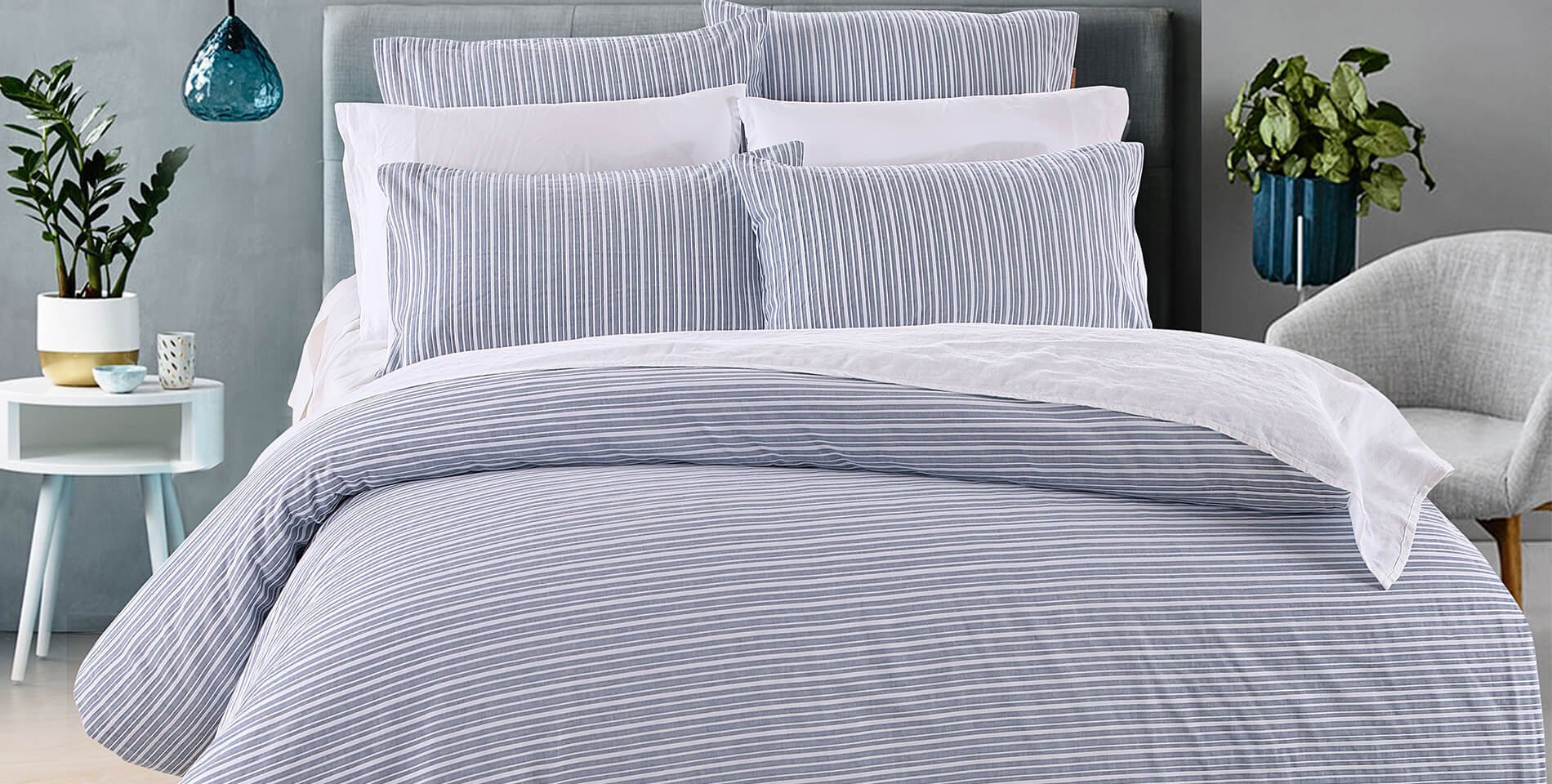
Short answer: Percale and sateen are weave structures, not quality grades. Percale is a one-over-one plain weave: crisp, matte, breathable, and the most abrasion-resistant option under high-temperature commercial laundering. Sateen floats each weft thread over three or four warp threads before interlacing, which puts more yarn on the surface: silkier hand, subtle sheen, better drape, and slightly faster surface wear. Most hotel programmes run percale in standard guest rooms and keep sateen for premium suites and retail lines. Choose by wash-cycle count and positioning — not by how either fabric feels on a showroom bed.
The weave is a structural decision, not a preference
Percale and sateen can be woven from the same cotton, spun to the same yarn count, at the same thread count, and finished in the same plant. What differs is the interlacing pattern — the order in which warp and weft threads pass over and under each other. That single variable changes how the fabric reflects light, how it drapes, how it creases, and which threads take the abrasion in a laundry drum.
In a percale weave, every weft thread passes over one warp thread and under the next, all the way across the fabric. Each intersection is a lock point, so no thread can move without pulling its neighbours. In a sateen weave, the weft skips: it floats over three or four warp threads, interlaces once, and floats again. The floats are what your hand feels as smoothness — and they are also the parts of the fabric with the least structural support.
This is why two sheets with identical fibre content and thread count can feel like different products. The weave decides the hand; the fibre and the yarn decide how long that hand survives. Both halves matter, and the other half is covered in our note on why thread count is not quality.
Percale and sateen, side by side
| Property | Percale | Sateen |
|---|---|---|
| Construction | One-over-one plain weave; every thread interlaced | Four-over-one float; fewer interlacings, more yarn on the surface |
| Hand feel | Crisp, cool, slightly dry | Smooth, silky, warmer to the touch |
| Surface | Matte; prints and colours read evenly | Subtle sheen; catches light on the float |
| Drape | Flat and structured | Fluid, falls closer to the body |
| Wrinkling | Creases readily — part of the character | Resists visible creasing |
| Abrasion resistance | Highest — every thread is locked at every intersection | Good, but the floats wear first |
| Industrial laundering | Handles hot wash, tumble and pressing cycles best | Needs a gentler cycle; floats show wear sooner |
| Typical placement | Standard guest rooms, hospitals, rental fleets | Premium suites, boutique properties, retail lines |
Read the durability rows together: percale wins on every measure that a laundry cycle tests, sateen wins on every measure a guest feels in the first five minutes. Neither is the better fabric. They are better at different jobs.
What a commercial laundry does to each weave
A hotel laundry is the harshest environment bed linen ever meets: hot washes, alkaline detergents, oxygen or chlorine bleach, high-speed extraction, and either tumble drying or a flatwork ironer with pressure and heat. Every one of those steps is a mechanical abrasion event, and abrasion lands where the yarn is most exposed.
In percale, no thread runs exposed — each intersection pins the yarn down, so wear distributes evenly and the fabric thins gradually instead of failing locally. In sateen, each float is a longer segment of yarn sitting on the surface with nothing holding it down. Drum friction and the ironer’s pressure work on those floats first: they develop a dull patch where the sheen used to be, then individual fibres break, and the surface pills or shows permanent cloudy areas long before the fabric is actually worn out.
That is why the same sateen sheet that photographs beautifully on week one can look tired at wash cycle one hundred, while the percale sheet next to it has gone from crisp to softly broken-in and keeps going. Programmes that turn rooms daily and wash at high volume should weigh that difference heavily; programmes with low turnover, or rooms that are remade rather than fully stripped, have more room to enjoy what sateen does well.
Fibre and yarn still outrank the weave
The weave decides how a sheet wears; the fibre and yarn decide how long. A long-staple, combed-cotton sateen will outlast a short-staple percale in the same programme, because longer fibres spin into smoother, stronger yarn that sheds fewer surface fibres under abrasion. Yarn count works the same way: fine 60s yarn in sateen feels genuinely luxurious, while the same weave in coarse 21s yarn just looks shiny and thin. Cotton Incorporated publishes plain-language material on staple length, combing and yarn count that explains the mechanics well — it is the background behind most of the questions worth asking a supplier.
This is also where the spec sheet earns its keep. Weave, yarn count, ply and fibre should all be stated lines, and the fibre content on the label has to match what is actually in the fabric — for US-bound goods that is not optional: the Textile Fiber Products Identification Act rules at 16 CFR Part 303 set out the generic fibre names and content disclosures a product label must carry. A “cotton sateen” that is really a poly-cotton blend is not a shortcut; it is a mislabelled shipment.
Sateen is not satin
Sateen is the floating weave structure woven in spun cotton yarns. Satin is the same structure in filament yarns — polyester or silk — and behaves completely differently in a laundry. Catalogues and listing pages mix the two words constantly. Specify the fibre and the weave in the same line: “100% combed cotton, sateen weave, 60s/1 yarn” leaves nothing to reinterpret.
What to write into the specification
- Weave named explicitly — percale or sateen — not left to the supplier’s default.
- Fibre and grade: 100% combed cotton, long-staple where the budget allows; state the blend ratio for any poly-cotton.
- Yarn count and ply, e.g. 40s/1 or 60s/1 single-ply — the numbers that separate two fabrics sold at the same TC.
- Thread count as one line in the spec, not the headline — 250–400 TC covers most hotel programmes in either weave.
- Finishing: singed, mercerised (for depth of colour and strength), sanforised/pre-shrunk. Shrinkage tolerance belongs here too — see our note on cotton shrinkage in towels and linens.
- Wash-test data on production fabric: pilling grade, seam slippage and hand-feel retention after 50 industrial cycles, with the test method named.
- A swatch of each weave at the same yarn count, washed three times at laundry temperature, so the comparison is made on what ships — not on showroom-fresh samples.
On cost: at the same fibre, yarn and TC, sateen typically quotes a single-digit to low-double-digit percentage above percale, because the floating structure weaves more slowly and needs better yarn preparation. That premium buys hand feel and drape, not durability — which is exactly why the two weaves belong in different rooms rather than at different quality claims.
Percale survives the laundry. Sateen survives the photo shoot. A well-run property specifies both — in the right rooms.
Frequently asked questions
Which weave lasts longer in a hotel, percale or sateen?
Percale, under equal fibre and yarn quality. Its one-over-one interlacing locks every thread down, so industrial laundering wears the fabric evenly. Sateen’s surface floats take abrasion first and dull before the fabric is structurally worn out.
Is sateen too slippery for hotel beds?
No — sateen is smooth rather than slippery, and a properly fitted sheet stays put. The practical concern is surface wear in high-turnover rooms, which is a durability question, not a fit question.
Does sateen wrinkle less than percale?
Yes. The floating threads resist creasing, which is one reason premium bedding and retail lines favour it. Percale creases by nature — many hotel programmes accept that as part of the crisp, freshly-laundered look, and pressing routines are designed around it.
Can I order both weaves from the same supplier at the same thread count?
Yes. The weave is a loom setting, not a different product line, so the same yarn at the same TC can be woven either way. Ask for samples of both at identical spec — that comparison isolates the weave as the only variable.
What thread count works best for each weave?
Most hotel percale sits between 250 and 400 TC in single-ply combed cotton; sateen programs typically run 300–400 TC, where the finer yarn makes the floats read as luxury instead of shine. Beyond that, comfort gains flatten while cost rises faster.
Does the weave change the price?
At the same fibre, yarn count and TC, sateen usually quotes a single-digit to low-double-digit percentage above percale, because it weaves more slowly and demands better yarn preparation. Spec both weaves in the same RFQ and the numbers will make the trade-off visible.
Send us the rooms. We will match the weave to the wash.
Tell us your room mix, laundry cycle counts and how the beds are serviced, and we will send percale and sateen samples woven at the same yarn count — with the wash data behind both, before you commit the order.
Request weave samples →Sinmal Production Team
Weaving & finishing, Sinmal Home Textile · Last updated October 2026
Keep reading
- Thread Count Is Not Quality: How to Actually Spec Bed Linen — The number that matters less than the weave
- How to Vet a Bed Linen Supplier Before You Send a Deposit — Five checks that catch most problems early
- Cotton Shrinkage in Towels and Linens — What the first wash does to size and fit
- Custom Bed Linens — What we produce: 200–1000 TC, cotton to bamboo