
Bath Towel Sizes: Bath Towel vs Bath Sheet vs Hand Towel
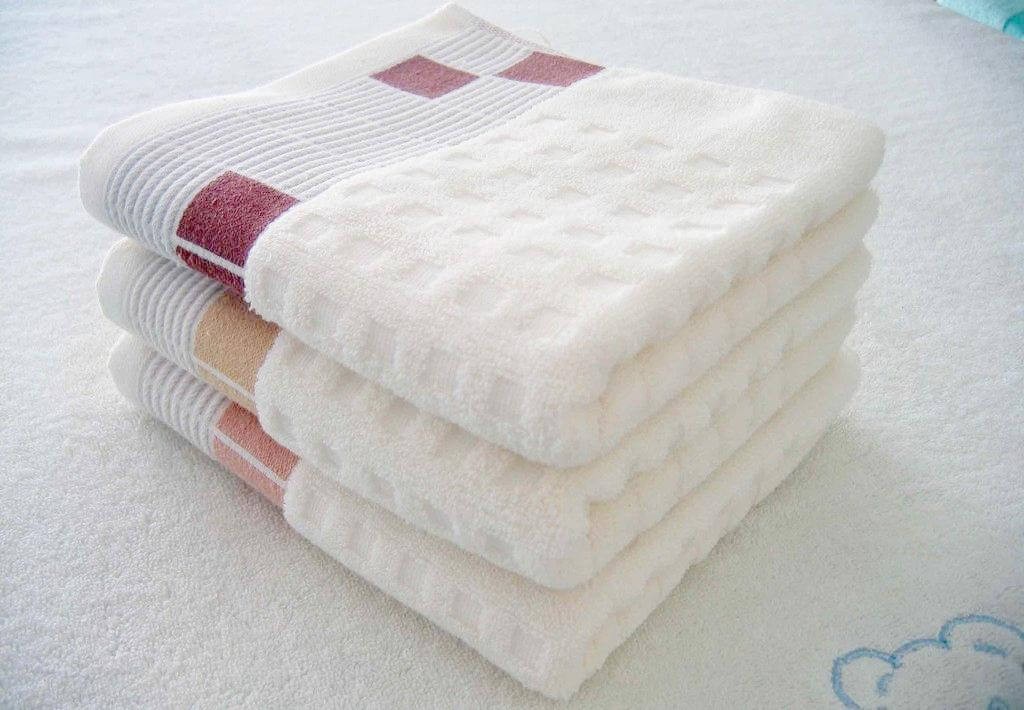
Short answer: Bath towel sizes are a specification decision, not a detail. The working ladder for hotels and resorts runs: washcloth around 30×30 cm, hand towel 40×70 to 50×100 cm, bath towel 70×140 cm, bath sheet 90×150 to 100×150 cm, bath mat 50×80 cm, and pool or beach towels 90×180 cm and up. The number that matters most is not on that list: towels are ordered by cut size, and terry shrinks roughly 4–8% in the first industrial washes, so the finished size a guest measures is always smaller than the loom width. Specify cut size, state the expected finished range, and put the tolerance in writing — that single line prevents most size complaints.
Why towel size is a purchase-order line, not a detail
Two suppliers can quote “100% cotton bath towel, 500 GSM” and ship products that differ by fifteen centimetres in length and a noticeable difference in coverage. Both quotes are technically accurate. The size was simply never written down, and each mill filled the gap with its own default.
Size drives more than coverage. It decides how many towels fit a laundry wash load, how long each one takes to dry, how the towel stack photographs on a shelf, and how the room reads to a guest checking in. A bath sheet in a compact city hotel room can overwhelm the rail and the vanity; a standard bath towel in a five-star resort reads as economy. The right size is a function of the property, not of the catalogue.
It also decides cost in a way buyers routinely underestimate. Terry is priced by weight, and weight scales with area: at the same GSM, a bath sheet carries roughly forty percent more dry cotton than a bath towel. Multiply that across a par stock of six to eight towels per room position and the size line moves the budget more than most finish options do.
The standard size ladder, side by side
There is no single international standard, but the hospitality market has converged on a working ladder. Treat these as the common cut sizes a mill will weave without tooling changes:
| Towel | Typical cut size | Finished size after wash | Common GSM | Where it goes |
|---|---|---|---|---|
| Washcloth / face towel | 30×30 – 35×35 cm | 28×28 – 33×33 cm | 400–550 | Vanity, spa treatments, F&B service |
| Hand towel | 40×70 – 50×100 cm | 38×66 – 47×94 cm | 450–600 | Vanity ring or rail, one per guest |
| Bath towel | 70×140 cm | 66×132 cm | 450–600 | The workhorse — one to two per guest |
| Bath sheet | 90×150 – 100×150 cm | 84×141 – 94×141 cm | 500–650 | Resorts, suites, spas, retail lines |
| Bath mat | 50×80 cm | 47×76 cm | 500–700 | Tub and shower side, changed daily |
| Pool / beach towel | 90×180 – 100×180 cm | 84×170 – 94×170 cm | 400–500 | Pool deck, sun loungers, beach service |
Two rows deserve a second look. The bath mat is deliberately heavier per square metre than the towels around it because it works wet, on a hard floor, dozens of times a day. And the pool towel runs lighter, not heavier: a 100×180 cm towel at 600 GSM is a heavy, slow-drying object that ties up laundry capacity, which is why resort pool towels almost always sit between 400 and 500 GSM.
These are cut sizes in centimetres because nearly all hospitality terry is woven and cut on metric looms. If your market works in inches, convert once at the specification stage and then keep the whole order in one unit system — mixed units on one purchase order is a classic source of a wrong-sized shipment.
Cut size vs finished size: the line that decides complaints
This is the single most misunderstood pair of words in towel sourcing. The cut size is what comes off the loom, before any finishing. The finished size is what you measure after washing, hemming and shrinkage have done their work. Terry cloth shrinks — typically four to eight percent over the first industrial washes — and the shrinkage is not a defect; it is the cloth relaxing to its natural state.
Problems start when a purchase order says only “70×140”. If that was meant as a finished size and the mill wove it as a cut size, the towel that arrives measures closer to 66×132 after washing, and the buyer reads it as short delivery. The fix costs one sentence: state the cut size, the expected finished range, and the measurement condition (after how many washes, at what temperature). Our note on cotton shrinkage in towels and linens covers how to test it on a sample before the bulk run.
Dimensional stability is also a formal requirement, not just a courtesy. Institutional towel performance standards such as ASTM D5433 set out dimensional change limits alongside absorbency and strength requirements for towel products, so a supplier who tests to a named standard can put numbers — not reassurances — on the size question.
Bath sheet vs bath towel: the operational math
The bath sheet question is really a laundry question. A 100×150 cm sheet at 550 GSM carries around 825 grams of dry cotton; a 70×140 cm towel at the same weight carries around 540 grams. The sheet holds roughly fifty percent more water after extraction, needs longer in the dryer, and takes a larger share of every wash load. Across thousands of cycles a year, a full bath-sheet programme costs measurably more to run than the same room count on bath towels — commonly a double-digit percentage more in laundry utilities and labour time.
What the sheet buys is perception. Wrapped in a bath sheet, a guest at a resort or a suite property feels the difference immediately, and in markets where towels are part of the retail story, the bath sheet is usually the product guests try to take home. That is why the common pattern is not either-or: bath towels as the daily standard, bath sheets in suites, spas and resort tiers where the upcharge is part of the positioning.
- City hotels with fast turnover: bath towel as standard, hand towels doubled instead of upsizing.
- Resorts and spa properties: bath sheet in the room, lighter pool towels on the deck — the two jobs are different.
- Boutique properties: one bath sheet folded to read generously on a wide rail; photograph the fold, not the spread.
- Budget and select-service: standard bath towel at the right GSM outperforms an undersized sheet at a thin weight every time.
There is no universal “standard size”
Sizing habit differs by market: North American retail commonly works in inches (a 30×54 inch bath towel, a 35×70 inch bath sheet), while European and Middle-Eastern hospitality works in metric cuts close to the table above. Neither is wrong — but a purchase order that just says “bath sheet” lets each side assume its own market. Write the centimetres.
Pairing size with weight
Size and GSM have to be chosen together, because a large towel at the wrong weight fails in a different way than a small one. A bath sheet under 450 GSM drapes like a sheet and dries fast but feels thin when a guest wraps it; a hand towel at 650 GSM is a brick on the rail and slows the laundry for no perceptible gain. The comfortable pairings sit in the table above: mid-weights for the workhorse sizes, heavier constructions for small high-contact items like mats, lighter weaves for the oversize pool towel that has to dry between shifts.
If the weight side of that decision is unresolved, our note on bath towel GSM walks through the property-type trade-offs in detail. The short version: weight decides the feel and the drying behaviour; size decides the coverage and the cost per piece — and neither rescues the other.
What to write into the size lines of the order
- Cut size in centimetres for every towel in the set — not one “bath towel” line covering three different products.
- Expected finished size range and the measurement condition: after N industrial washes, at wash temperature X.
- Tolerance: typically ±2% on width and length at delivery; agree it in writing so it cannot be renegotiated at inspection.
- Shrinkage allowance agreed as a test result on the approval sample, not as a promise — see the shrinkage note above.
- Hem type and its width, because a deep hem steals usable size from a towel cut to a tight target.
- Care label content and placement; symbols should follow the GINETEX care labelling system so laundry staff in any market read the same instructions.
- One physical sample of each size, washed three times at laundry temperature, signed and kept by both sides as the size reference for inspection.
Guests never measure a towel. They notice when it covers them — and when it does not. The centimetres are how you guarantee the first and avoid the second.
Frequently asked questions
What is the difference between a bath towel and a bath sheet?
Size, not construction. A bath towel is typically 70×140 cm; a bath sheet runs 90×150 to 100×150 cm, giving roughly 40–50% more fabric. The bath sheet wraps an adult fully, costs and dries proportionally more, and suits resort, spa and suite positioning.
What size is a standard hotel bath towel?
Most hospitality programmes cut bath towels at 70×140 cm, which finishes around 66×132 cm after washing. Compact properties sometimes use 68×136 cm to save cost; premium chains hold the full 70×140 cut and let the GSM carry the quality signal.
Should a hotel buy bath sheets instead of bath towels?
Only where the positioning supports it. Bath sheets raise laundry cost by a double-digit percentage in utilities and dryer time. The common compromise is bath towels house-wide with bath sheets in suites, spas and resort tiers.
Why is my towel smaller than the size I ordered?
Almost always a cut-size versus finished-size mismatch. Terry shrinks four to eight percent in the first washes. If the order said 70×140 without stating whether that is cut or finished, the receiving measurement will land below the number. Specify both, plus the tolerance.
What size should hotel hand towels and washcloths be?
Hand towels commonly cut at 40×70 to 50×100 cm — the smaller cut suits vanities, the larger reads generous on a rail. Washcloths sit at 30×30 to 35×35 cm. Both should be specified with the same cut/finished logic as the bath sizes.
What size is a resort pool or beach towel?
Typically 90×180 to 100×180 cm, woven lighter (400–500 GSM) so it dries between pool shifts. An oversize towel at a heavy GSM becomes a laundry bottleneck — the size is for coverage on a lounger, not for weight.
Send the property. We will send the size ladder.
Tell us the property type, the room count and how the laundry runs, and we will quote the full towel set with cut sizes, finished ranges and tolerances stated on every line — samples washed before you commit.
Request a size quote →Sinmal Production Team
Weaving & finishing, Sinmal Home Textile · Last updated October 2026
Keep reading
- Bath Towel GSM Guide — The weight side of the same decision
- Zero Twist vs Ring Spun Towels — The yarn twist decision behind the same pile
- Hotel Pool Towels vs Bath Towels — Why the pool deck gets its own size and weight spec
- Cotton Shrinkage in Towels and Linens — What the first wash does to every size on this list
- Printed Beach Towel: Print Methods Compared — Choosing the decoration for the oversize sizes
- Custom Bath Linens — The full set, woven and cut to your size lines