
Baby Bath Towels: What Makes a Towel Safe Enough for Newborn Skin?
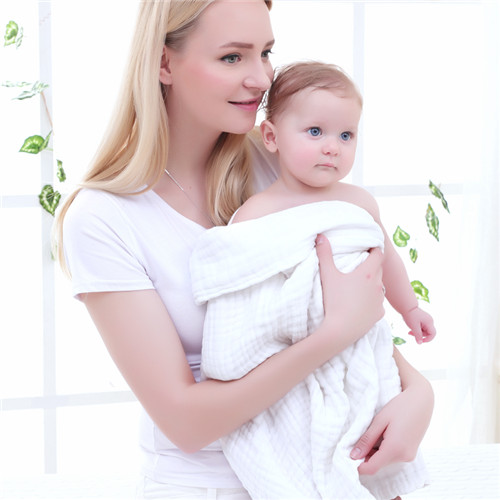
Short answer: A proper baby towel differs from an adult towel in four ways: lighter weight (300–400 GSM terry, or layered muslin gauze), combed long-staple cotton so no loose fibres irritate skin, certification to the strictest textile class (OEKO-TEX Standard 100 Class I), and safety-first trims — no long cords, no small sewn parts, no rough seams. Thicker is not better for babies: a heavy towel is harder to wrap around a small body and slower to dry between the two daily baths newborns actually get.
Why baby towels are deliberately thinner
Adult towel logic says “plusher is premium”. Baby logic inverts it, for three practical reasons:
- Handling: a parent wraps a baby one-handed while supporting the head. A 600 GSM towel is stiff armour; 350 GSM drapes and tucks.
- Drying between uses: newborns bathe daily, sometimes twice. A lighter towel that dries before the next bath is a hygiene feature, not a cost saving.
- Skin mechanics: infant skin is thinner and more permeable. Dense pile traps detergent residue and moisture against it — the exact combination baby skin dislikes.
The two constructions that work: light terry (300–400 GSM) with combed yarn for the everyday bath, and layered muslin gauze (typically 4–8 layers) that gets softer with every wash and dries in minutes. Hooded styles in both constructions remain the retail favourite — the hood is a function (head warmth right after the bath), not just decoration.
Muslin gauze vs light terry: which to spec
| Light terry (300–400 GSM) | Layered muslin gauze | |
|---|---|---|
| Feel | Classic towel, plush-light | Airy, softens with every wash |
| Absorbency | High | Medium–high, wicks fast |
| Drying speed | Fast for a towel | Extremely fast |
| Durability | Good with combed yarn | Excellent — layers fuse tighter |
| Best for | Everyday bath, hooded styles, gift sets | Summer, swaddle-and-bath sets, sensitive skin lines |
| Retail perception | Familiar “proper towel” | Premium natural/organic positioning |
Certification: the non-negotiables
For anything touching infant skin, certification is a market-access requirement, not a marketing extra:
- OEKO-TEX Standard 100, Class I — the infant product class with the strictest limits (formaldehyde, heavy metals, pH, azo dyes). If a supplier offers “Standard 100” without the class, ask which class.
- Test reports per production lot for private-label programs — not just a certificate from years ago on a different fabric.
- Fibre honesty: 100% cotton means 100%. Blends must be labelled; “bamboo” claims mean viscose from bamboo and should be worded to pass retail compliance.
The trims that fail safety review
Long hood ties and cords (entanglement risk), loose bows and sequins (choking risk), embroidered eyes without a backing patch (pull-off risk), and stiff sewn-in labels at the neckline. All four are spec decisions — fix them before sampling, not after the retailer’s compliance audit.
For private-label baby brands: what to ask a factory
- Class I certification on the exact fabric you will receive, with the report reference in writing.
- Combed, long-staple yarn — ask specifically, because open-end yarn hides behind a nice hand feel until the third wash.
- Wash-test data at 60°C — baby linen is washed hot; a towel that pills at home temperatures still fails where it matters.
- Trim safety sign-off: pull tests on any appliqué, cord length limits, label placement away from the neck.
- Pre-washed gauze for muslin items — unwashed gauze shrinks unevenly between layers and puckers permanently.
Age-based sizing: the table retailers actually use
| Stage | Typical towel size | What changes |
|---|---|---|
| Newborn (0–6 m) | 75×75 cm hooded | Wrap-sized; hood proportion matters more than size |
| Baby (6–18 m) | 80×80 / 90×90 cm | Hood still functional; tucks under a sitting baby |
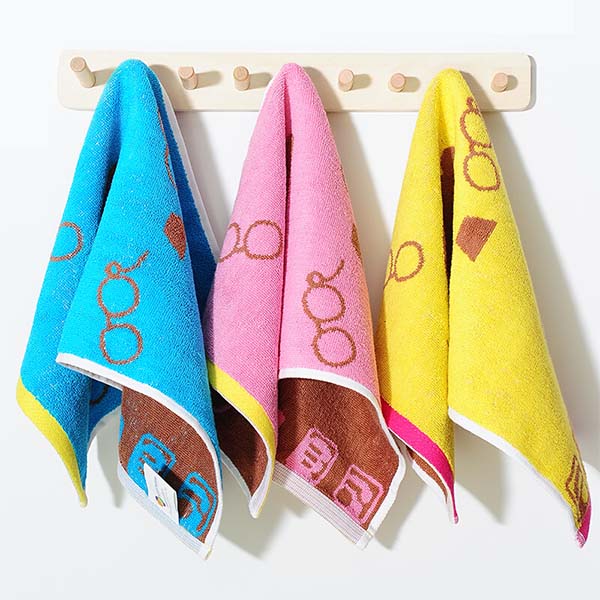
| Toddler (18 m–3 y) | 60×120 cm | Bath-sheet-for-small-humans stage; lighter terry works |
| Kids (3–8 y) | 70×140 cm | Graduates toward adult sizing; print and colour do the selling |
Two sizing rules worth stealing: never scale a baby towel from an adult pattern (border-to-field ratios and hood placement are their own geometry), and state the size after washing in the spec, so a 2–5% shrinkage tolerance is priced in rather than discovered in reviews.
Packaging: where baby products are really judged
Baby linen is bought as a gift far more often than as a replenishment, and the unboxing does half the selling. What works in retail:
- Certification visible on-pack — the OEKO-TEX Class I mark on the sleeve, not buried in a web page.
- Touch access: a window or open fold that lets the buyer feel the cloth — hand feel closes baby purchases.
- Ribbon or belly-band, not plastic clamshell: the sustainable-packaging expectation is strongest in this category.
- Care instruction card included — it signals confidence and pre-empts the softener mistake that generates the “went stiff” returns.
Frequently asked questions
What GSM should a baby bath towel be?
300–400 GSM light terry, or layered muslin gauze. Heavier towels are harder to wrap around a baby and slow to dry between daily baths.
Are hooded baby towels worth it?
Yes — the hood keeps a wet head warm right after the bath, which parents notice immediately. Just ensure the hood is an extension of the towel, not an add-on panel with stiff seams.
What does OEKO-TEX Class I actually mean?
It is the strictest class of the Standard 100 system, written for infant products: tighter limits on chemicals, dyes and pH than classes for adult clothing or home textiles.
Is muslin or terry better for newborns?
Both work: terry for the classic post-bath wrap, muslin for fast-drying, sensitive-skin and summer use. Many brands carry one of each.
How should baby towels be washed?
60°C with fragrance-free detergent, no fabric softener (it coats fibres and irritates skin), and a full rinse. Softener is even worse on baby towels than on adult ones.
Can baby towels be customised for a brand?
Yes — embroidery, printed borders, custom hoods and packaging are standard. Keep trims safety-compliant and certification current for the exact production fabric.
What sizes should a baby towel line carry?
A tight set works: one hooded 75–80 cm square for newborn-to-baby, one 60×120 cm for toddlers, optionally one 70×140 cm kids size. Three SKUs cover the age range without diluting stock.
Building a baby line? Start with the spec, not the sample
Tell us your market and certification target. We will spec fabric, GSM and trims to pass compliance first time — with Class I certified samples to your design.
Request baby line samples →Sinmal Production Team
Weaving & finishing, Sinmal Home Textile · Last updated September 2026
Keep reading
- Materials & Craftsmanship — Combed yarn and certified finishing
- Bath Towel GSM: 400 vs 550 vs 700 — Where adult weight logic breaks down