
Why Your Bath Towels Go Hard After Washing (And the Fix)
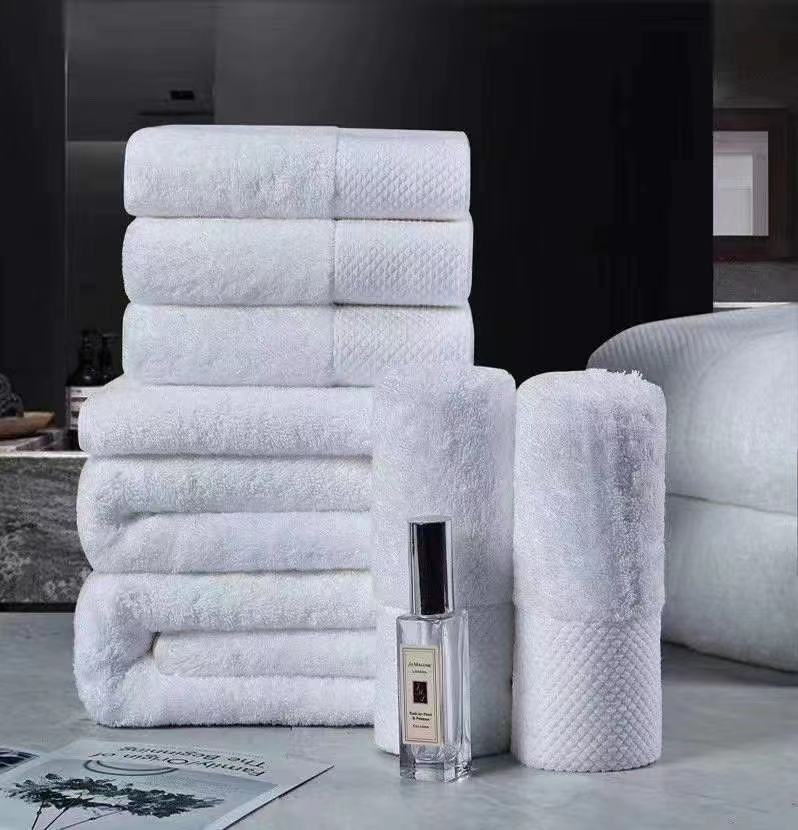
Short answer: Towels go hard for one structural reason: residue and crushed pile. Fabric softener coats the loops, excess detergent traps in the pile, hard-water minerals bake in, and line-drying without agitation flattens the loops flat. Three of the four causes are free to fix today. The fifth cause — short-fibre yarn — is a construction problem only a better towel solves.
Cause 1: Fabric softener (the biggest offender)
Softener works by depositing a waxy film — which is exactly the opposite of what a towel’s loops need. The film makes the towel feel soft out of the dryer, then builds up cycle after cycle until the pile is coated, matted and less absorbent. The towel gets stiffer with every “softening” wash.
- Fix: stop using softener on towels entirely. Replace it with a half-cup of white vinegar in the rinse cycle once a month to strip old residue — it rinses clean and leaves no smell.
Cause 2: Too much detergent
More soap does not mean cleaner towels. Overdosed detergent does not rinse out of dense pile; it dries into the loops as crystals that stiffen the fabric and can irritate skin. Front-loaders and quick cycles make this worse because they use less rinse water.
- Fix: halve the dose you use now, run the warmest cycle the care label allows, and add an extra rinse. If towels smell musty, the answer is more rinsing, not more detergent.
Cause 3: Hard water minerals
In hard-water areas, calcium and magnesium settle into the pile as chalk. Chalk-stiffened towels feel like canvas and grey out over time. This is the most common cause in regions with hard mains water.
- Fix: a water softener at the property level is the lasting answer. As a treatment: an occasional hot wash with a washing-soda soak dissolves mineral buildup.
Cause 4: Line-dried, never tumbled
Sun-dried towels are lovely until you touch them. Without tumble action, loops dry pointing in random stiffened directions — the pile literally sets flat. Hotels know this: even line-first operations finish towels with a short, hot tumble.
- Fix: if you line-dry, finish with 10–15 minutes in a dryer (or a hot shake-out). The agitation re-fluffs the pile; the heat is almost optional.
The 60-second rescue routine
Wash hot with half-dose detergent → extra rinse → vinegar rinse (no softener) → medium tumble dry. Most “ruined” towels come back to life in one or two cycles of this.
Cause 5: When it really is the towel
Care fixes construction problems only up to a point. If your towels went stiff from month one, the cause is likely in the yarn:
| Construction sign | What it means | What to spec next time |
|---|---|---|
| Pills after a few washes | Short-staple or open-end yarn | Combed, ring-spun cotton; long-staple where possible |
| Stiff despite perfect care | Cheap filler yarn in the base weave | Ask for cotton pile and base, not cotton-face only |
| Flat, low pile feel | Low pile height sold as flat weave | State pile height / loop density in the spec |
| Grey residue that never washes out | Mineral + detergent cement from hard water | Property water treatment, or accept planned replacement |
This is why we comb the yarn and finish with proper washing and pre-shrinking — the materials page shows the difference workmanship makes. For hotels, we also spec towels for industrial laundering from the start: the loops that survive 50+ hot washes are chosen at the loom, not rescued in the laundry.
Why commercial laundering is a tougher test than your washing machine
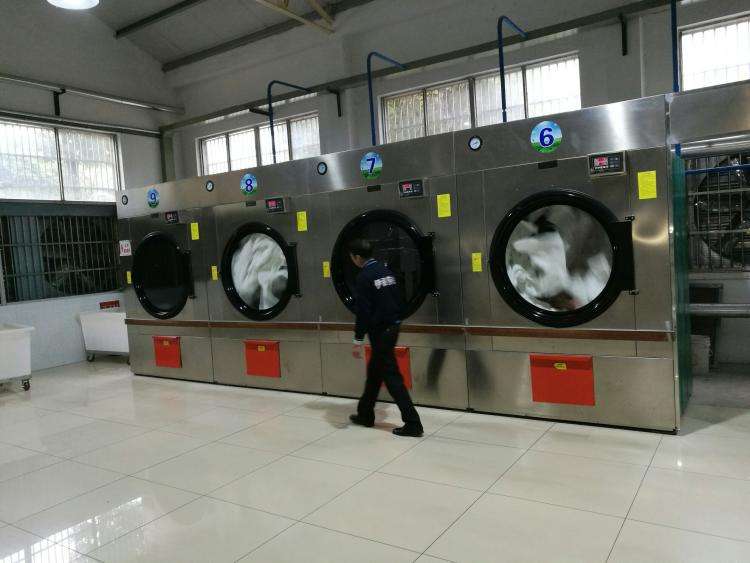
A domestic washing machine is gentle compared to what hotel and spa linen goes through. Commercial laundering means higher wash temperatures, alkaline detergents, chlorine or oxygen bleach, tunnel-washer chemistry and far more violent mechanical action — multiplied by 150–300+ cycles a year. Under those conditions, the difference between a towel that lasts two years and one that greys out in six months is decided almost entirely at specification:
- Yarn: combed, ring-spun, long-staple cotton holds loops; open-end short-staple sheds them into the lint trap.
- Pile density and twist: denser, well-twisted pile resists matting under extraction pressure.
- Hems: double-needle folded hems survive tumble and ironer contact; single-stitched hems open first.
- Colour: solution-dyed yarns and bleach-resistant whites age better than piece-dyed shades in chlorine environments.
A five-minute test: residue or construction?
Before you blame the towel — or the laundry — run this on a stiff towel:
- Soak half of the towel in plain hot water for 15 minutes, then feel both halves. If the soaked half is noticeably softer, the stiffness is soluble residue — a wash-routine problem.
- Smell the soak water. A detergent or sour odour confirms buildup; cloudy or milky water means overdosed detergent is still coming out.
- If both halves feel identical and stiff after a clean hot wash with extra rinse, the cause is mineral or construction — run the washing-soda soak, and if stiffness still persists, judge the towel.
A care card you can hand to housekeeping
- No fabric softener on towels — ever.
- Half-dose detergent, warm to hot cycle, extra rinse.
- Vinegar rinse monthly; washing-soda soak quarterly in hard-water areas.
- Tumble finish every line-dried towel, 10–15 minutes.
- Wash whites separately from darks; never overload the drum — crowded towels cannot rinse.
Print it, tape it to the laundry shelf, and most stiffness complaints disappear within a fortnight. The rest are construction — and now you know what to ask for next time.
Frequently asked questions
Does vinegar really soften towels?
It dissolves detergent and mineral residue that stiffen the pile. It is a stripping agent, not a softener — used monthly, it restores the loops’ natural loft.
Are hotel towels stiff on purpose?
No — hotels that feel plush actually wash hotter and tumble more. Stiffness in hotel towels usually means the laundry is under-resourced, not that the towels are special.
Why did my new towels go hard after the first wash?
Factory finishing often includes a light softening agent that washes out. If stiffness appears immediately, suspect overdosed detergent, hard water, or short-fibre yarn.
Is line-drying bad for towels?
It saves energy but sets the pile flat. A short tumble after line-drying gets both the energy saving and the fluff.
Do expensive towels stay soft longer?
Long-staple combed cotton resists pilling and matting far better — but only with sane care. Softener will ruin a premium towel exactly as fast as a cheap one.
Can I fix towels that are already crunchy?
Often yes: hot wash, extra rinse, washing-soda soak for minerals, then a full tumble dry. If stiffness persists after two rescue cycles, the cause is construction.
What should hotels ask for to survive industrial laundry?
Combed ring-spun cotton pile, double-stitched hems, a stated shrinkage tolerance and wash-test data from the actual production fabric — not a hand-feel judgement on a fresh sample.
Towels that survive your laundry, not just the showroom
Tell us how your towels are washed — home, hotel or spa — and we will spec yarn and finishing for that reality, with samples that go through your actual wash routine.
Get laundry-proof samples →Sinmal Production Team
Weaving & finishing, Sinmal Home Textile · Last updated September 2026
Keep reading
- Bath Towel GSM: 400 vs 550 vs 700 — Weight by use case, not by number
- Custom Bath Linens — Towels, mats and robes woven to spec