
How to Vet a Bed Linen Supplier Before You Send a Deposit
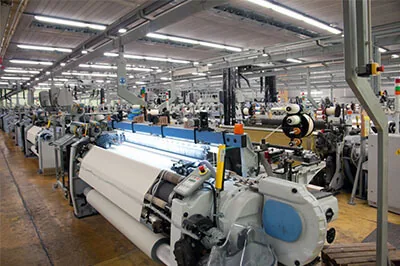
Short answer: A supplier fails in predictable ways: the quote was never their own capacity, the sample came from a different factory than the bulk, or nobody owned the QC. You can catch nearly all of this before the deposit with five checks: who runs the machines, what the wash data says, where things are traceable, what the contract actually commits to, and how samples are handled. None of these require a factory visit — they require specific questions and specific answers.
Check 1: Ask questions only the maker can answer
The fastest filter is asking questions whose answers require first-hand knowledge. A trading company can forward a quote; it cannot tell you what happens on its loom floor.
| Question | A maker answers | A middleman answers |
|---|---|---|
| Which loom width runs my fabric? | Names the width and machine type | “Our factory is very professional” |
| What is your current lead time for 500 sets? | Gives a range plus booking logic (“3–4 weeks after grey fabric”) | Repeats your requested date back to you |
| What GSM and shrinkage do you guarantee? | Numbers with tolerance (“+/-4%”) | “Very high quality, don’t worry” |
| Can I video-call the production floor? | Yes, or schedules it around shifts | Deflects: “manager is travelling” |
One vague answer is a mood. Three vague answers are a pattern. Walk away from patterns.
Check 2: Demand wash data, not adjectives
Bed linen dies in the laundry, not in the showroom. Ask for documented results after 50 industrial washes — shrinkage percentage, pilling grade, seam slippage, colourfastness. A maker who tests has the report on file. A middleman must go ask someone else, and often comes back with someone else’s template.
For your own program, define acceptance numbers in the PI: shrinkage within tolerance, pilling grade, and colourfastness targets for washing, rubbing and light. If a supplier will not put those numbers in the contract, the contract is protecting them, not you.
The deposit rule
Never let the sample payment and the bulk deposit be the same decision. Approve a pre-production sample of your spec — fabric, colour, stitching, label — then pay the bulk deposit. A supplier who pushes you to skip the PP sample is telling you what the bulk will look like.
Check 3: Traceability from grey fabric to packing
Ask the supplier to describe, in one message, the chain for your order: where the yarn comes from, who dyes it, who weaves, who cuts and sews, who packs. Then pick one step and drill: “Which dye house, and what is their colourfastness record on dark navy?”
A vertical or well-managed chain answers fluently because the people answering live next to the process. A reseller answers with a new mystery at every step — and when something goes wrong, every step becomes someone else’s fault.
Check 4: Contract terms that survive a bad month
Ask for these five clauses in writing before the deposit. Most are standard for a real manufacturer; all of them are negotiable for one:
- Spec sheet attached to the PI — fabric, GSM, dimensions with tolerance, colour codes, workmanship standard.
- Pre-production sample approval as the reference for bulk quality.
- AQL inspection standard (e.g. AQL 2.5) with third-party inspection allowed.
- Delay remedy — what happens if the confirmed ship date slips beyond an agreed window.
- Quality claim window — reasonable time after receipt to raise and resolve claims.
Check 5: Sample discipline tells you the future
How a supplier treats samples is how they will treat your bulk order. Watch for three behaviours:
- Sample from the same mill as bulk. Ask directly: is this sample woven in the same plant that will run my order? Getting a “better” sample from a demo line is the oldest trick in sourcing.
- Samples of your spec, not theirs. If you asked for 40s combed cotton percale and they send “similar”, that is your answer about how your spec will be treated.
- Honest costs. A maker charges for samples and deducts from bulk; a trader often “free samples” you into a worse unit price.
You are not looking for a perfect supplier. You are looking for one whose answers are boringly specific.
The one-week vetting timeline
- Day 1–2: send the five machine questions and the wash-data request to all candidates.
- Day 3–4: compare answers side by side; shortlist the two or three specific ones.
- Day 5: request a sample of your spec with a declared production plant.
- Day 6–7: wash the sample three times; re-measure and compare hand feel and dimensions.
- Then: negotiate the five contract clauses, approve a PP sample, pay the deposit.
What this looks like at SinmalTex
We are the factory: weaving, dyeing partners, cut-and-sew and QC under programs we run daily. Our ordering process and quality control page describe exactly the steps above, and we welcome the five questions — they are the easy ones for us.
Frequently asked questions
Do I really need a factory audit for a first order?
A full audit is often overkill for small orders. The five checks above plus a video call of the floor cover 80% of the risk. Save the audit for when volume justifies it.
What is a normal deposit for custom bed linen?
Commonly 30% with balance against B/L copy, sometimes 50% for fully custom fabric. Anything demanding 100% upfront deserves extra scrutiny of every other check on this list.
The supplier sent trade references — is that enough?
References help but are curated. Combine them with the machine questions and wash data; specific answers are harder to fake than reference letters.
How many washes should test data cover?
For hotel programs, 50 wash cycles is the standard benchmark. Retail programs can accept less, but ask for the number and the standard used.
Can I combine these checks with a lower price negotiation?
Yes — specificity is leverage. A supplier who has already confirmed GSM, shrinkage and weave cannot later substitute a cheaper fabric and call it equivalent.
What if two suppliers both pass everything?
Split the first order. Give the smaller program to your runner-up; competition keeps both sides honest and de-risks your second order.
Run the five checks on us
Send us your spec and the machine questions — we answer with specifics, a sample of your exact fabric, and wash data you can put in front of your own customers.
Start the checks →Sinmal Production Team
Weaving & finishing, Sinmal Home Textile · Last updated September 2026
Keep reading
- Thread Count Is Not Quality: What to Spec Instead — The other half of a good bed linen spec
- Real Peshtemal Mill vs Trading Company — The same 12 questions, for towels